This page corrects itself as you read.
The keynote speaker at the Independence Summit wore white trainers with her suit, which is how you know someone has never had to choose between the two. She walked on to music, waited for the applause to settle, and told eight hundred people that the greatest mistake of her early career had been waiting for permission.
It was a good line. People wrote it down. In the fourth row, Grace wrote it down too, on the back of the parking receipt she would need at the exit, because the conference had cost her a day’s leave and the parking had cost her the rest of the week’s lunches.
Never depend on anyone, the speaker said, and she meant it.struck out: meant it. corrected to: believed it. She had built the company from her kitchen table. What the story did not mention, because stories rarely mention furniture, was whose kitchen it was, who had paid for the table, and who collected her children at three while she was busy refusing to wait for permission.
None of this makes her a liar. She did work hard. She did take risks. She simply took them in a building with very good scaffolding, and then gave a talk about climbing. She described herself, without irony, as self-madestruck out: self-made corrected to: self-assembled, from parts supplied by others.
“There is a peculiar kind of wisdom that becomes available once somebody else has settled the bill.”
Consider two founders with the same idea. The first describes leaving his salaried job as the braveststruck out: bravest corrected to: best-insured thing he has ever done, and in a sense it was. It is brave to jump. It is somewhat less brave when your father has already measured the drop and laid a mattress at the bottom.
The second founder has the same idea, the same spreadsheet and two children who insist on eating every day. She does not jump. Years later, at a dinner party, the first founder will tell her, kindly, that the difference between people who make it and people who don’t is mostly courage.struck out: courage. corrected to: a parent with savings. Their ideas were identical. But dreams are treated very differently depending on who can afford the nightmare.
At the awards dinner, he thanked his wife, as men in his position do, and called her his rock. A rock. An extraordinary promotion. From unpaid infrastructure to geological feature.
She smiled, because the cameras were on her, and because she had long ago stopped expecting the speech to contain the years: the job she turned down, the move she agreed to, the evenings that made his evenings possible. He was not lying either. He believed every word. They may both be sincere. Sincerity is remarkably affordable.
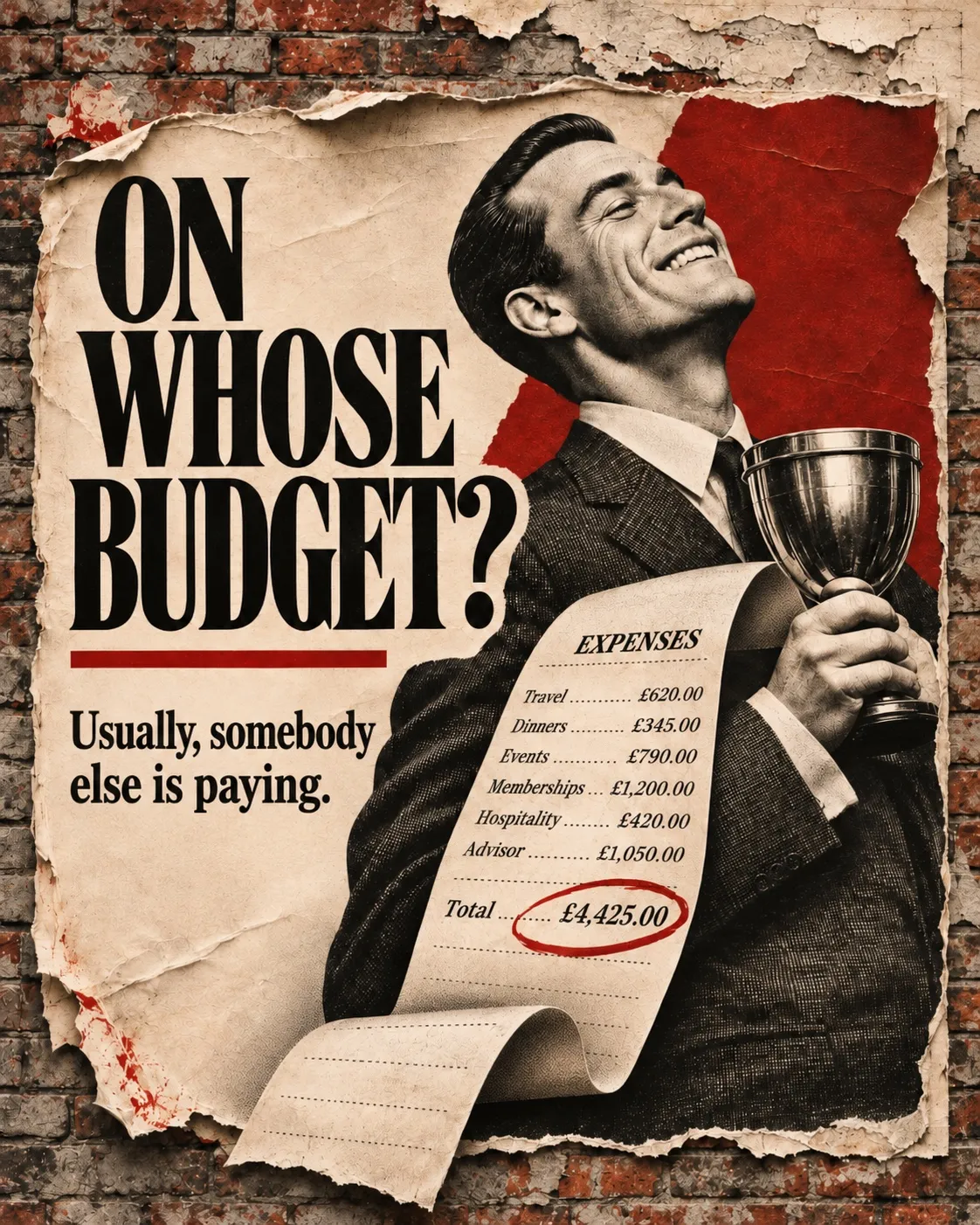
On whose budget?
End- Filed under
- Public Virtue
- Form
- Composite
- Length
- 439 words
- First published
- [DATE]
- Got something wrong?
- Write to us